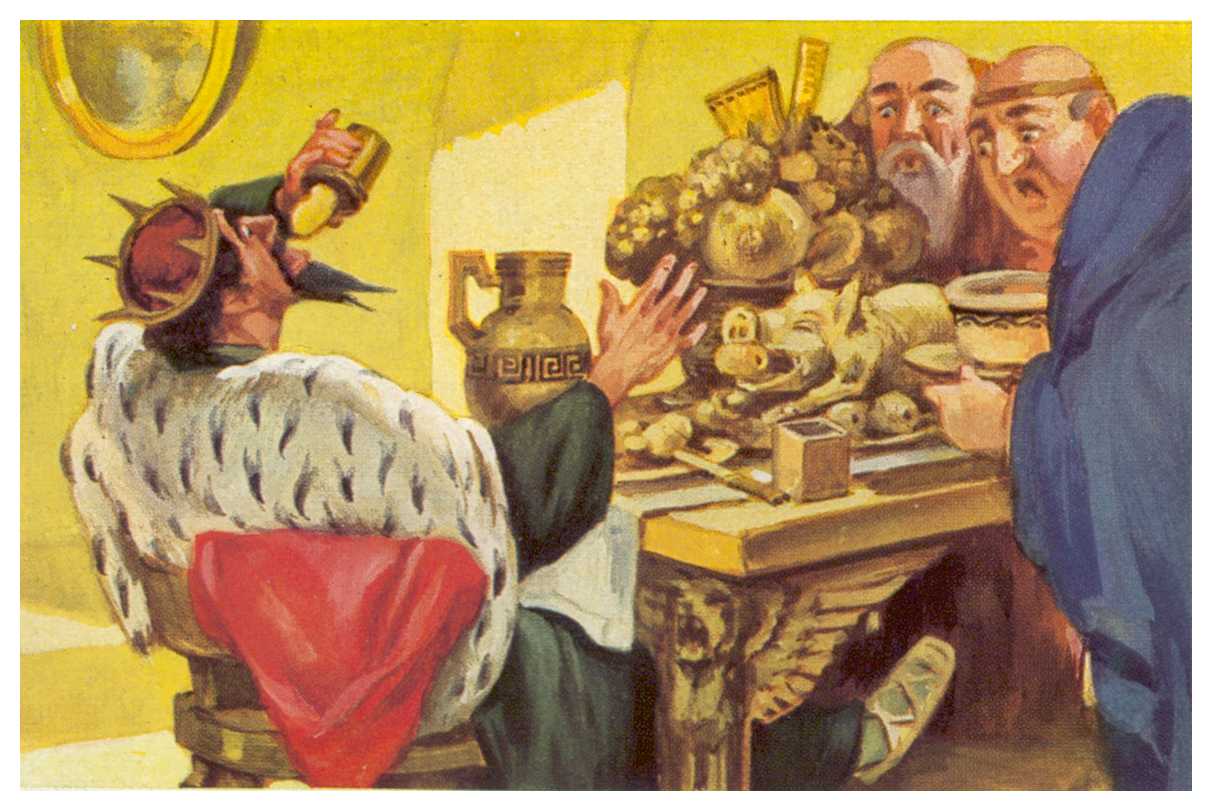
 The myth on which the poem is based is the story first told by Ovid in his “Metamorphoses”. Midas, king of Phrygia, is granted a wish by the god Dionysos and his greed prompts him to ask that everything he touches will turn to gold. The wish comes true but Midas soon comes to regret his choice, given that life becomes impossible if every morsel of food one touches changes into hard yellow metal. Midas is forced to ask Dionysos to reverse the spell.
- The poem comprises eleven six-line unrhymed stanzas.
- It reads almost like prose with plenty of run-on lines and not much evidence of rhythm in the diction.
- However, there is plenty of rhythm in the ideas, as concepts build on each other and relationships between concepts become clear to the reader.
- This poem is written in the form of a dramatic monologue from a female perspective, similar to the other poems in The World’s Wife collection.
Main Themes
- Greed is a recurring theme as this is what motivated Midas to make his wish in the first place. The damaging effects are portrayed throughout with both husband and wife, in the end, being left alone to suffer the effects of wishing to possess a substance which ultimately
feeds no one
. - Consequences of our actions is a prevalent theme as both Midas and his wife pay the price of not really taking the time to deliberate and think through what would follow if they chose one action over another.
- Loneliness and solitude are all that is left for both characters by the end of the poem as a result of one selfish act. A life of solitude is chosen as soon as Midas is
granted
his foolish and selfish wish.
- One way Duffy achieves a satirical tone is through colloquial language and use of uncomplicated language. Mrs Midas talks as if she were an ordinary housewife, not that of a legendary king. e.g she is gently mocking herself in the ninth stanza where she says “And then I came home, the woman who married the fool, who wished for gold”.
- Carol Ann Duffy uses a lot of imagery to convey the satirical tone. In the fourth stanza, Mrs Midas describers her husband “spitting out the teeth of the rich” as he eats corn on the cob. The kernels turn to gold, resembling gold capped teeth of the wealthy.

No comments:
Post a Comment